Slang moves faster than trends, and in 2026, it evolves almost overnight. One day you’re fluent in internet talk, the next day you’re lost in a sea of abbreviations.
If you’ve been scrolling TikTok comments, chatting on Discord, or texting friends, chances are you’ve seen “wtv meaning in text” pop up again and again.
It’s short, casual, and a bit mysterious. But behind those three letters is a whole attitude. Understanding it isn’t just about knowing the definition—it’s about reading tone, context, and even emotion in modern digital conversations.
What does wtv meaning in text mean in slang?
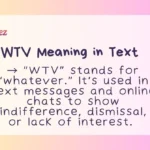
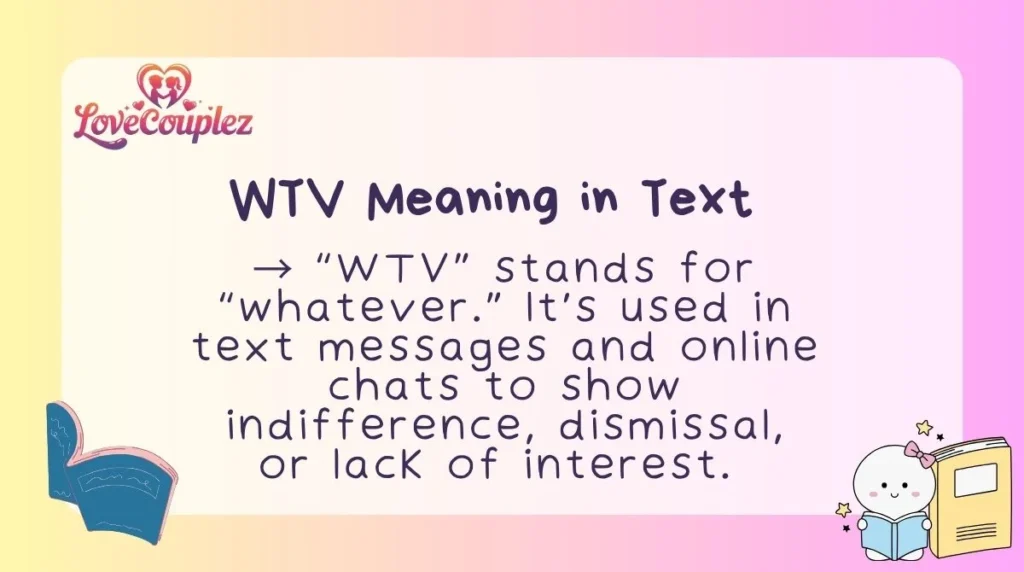
→ “WTV” stands for “whatever.” It’s used in text messages and online chats to show indifference, dismissal, or lack of interest. Depending on tone, it can feel casual, annoyed, or even passive-aggressive.
Quick Meaning Points:
• Tone: Neutral / Slightly Negative
• Who uses it most: Gen Z, online communities
• Where used most: TikTok, texting, gaming chats
• Example sentence: “You don’t wanna come? wtv.”
Core Meaning Explained
At its core, “wtv” is simply a shortened version of “whatever.” But modern slang is never just about literal meaning—it’s about feeling.
In casual use, “wtv” signals:
- You don’t care much about the outcome
- You’re okay with anything
- You’re slightly annoyed but not fully expressing it
The meaning in text depends heavily on context.
If someone says:
“Pick any place to eat, wtv”
That’s relaxed and flexible.
But if someone replies:
“Do what you want, wtv”
Now it carries emotional weight—possibly frustration or disengagement.
That dual meaning is what makes it powerful in modern slang usage. It’s short, but loaded.
Origin + Evolution Timeline
Early internet roots
“Whatever” has always been part of spoken English. When texting culture grew in the early 2000s, people began shortening words to save time—giving birth to abbreviations like “wtv.”
Meme spread phase
Around the mid-2010s, meme culture pushed short slang into mainstream use. Platforms like Twitter and early Instagram comments normalized ultra-short replies like “idk,” “brb,” and “wtv.”
Mainstream adoption
By the late 2010s and early 2020s, “wtv” became common in texting and casual chats, especially among younger users.
2026 current usage
Now in 2026, “wtv” isn’t just shorthand—it’s a tone marker. It reflects mood, personality, and even social dynamics in conversations. It’s less about saving time and more about expressing attitude.
How Gen Z Uses WTV Today (2026 Focus)
TikTok
On TikTok, “wtv” appears in comments when users don’t fully agree but don’t want to argue.
Example:
“wtv this trend still funny 😂”
Discord
In Discord chats, it’s often used during fast conversations.
Example:
“wtv bro just join the game”
Gaming Chat
Gamers use it when they don’t care about outcomes or decisions.
Example:
“wtv let’s just rush mid”
Instagram Comments
It shows up in debates or reactions.
Example:
“wtv people always complain”
Text Messages
This is where tone matters most. It can sound chill or slightly cold depending on the situation.
Real Chat Style Examples
Friend 1: You wanna go out tonight?
Friend 2: idk I’m tired
Friend 1: come on bro
Friend 2: wtv I’ll come
Friend 1: I think you’re wrong
Friend 2: wtv think what you want
Friend 1: Which movie should we watch?
Friend 2: wtv you pick
Friend 1: You didn’t reply all day
Friend 2: I was busy
Friend 1: sure
Friend 2: wtv
Friend 1: Let’s play later
Friend 2: wtv just text me
Similar Slang Comparison Section
Understanding “wtv meaning in text” becomes easier when you compare it with similar slang.
IDK (I don’t know)
More neutral and informational. No attitude.
IDC (I don’t care)
Stronger than “wtv.” Sounds more blunt and sometimes rude.
K (Okay)
Short but can feel cold or dismissive, similar vibe to “wtv” in some contexts.
Meh
Shows boredom or lack of interest, but less confrontational than “wtv.”
Whatever (full word)
Same meaning, but “wtv” feels more modern and digital.
Psychological + Social Meaning
Slang like “wtv” exists for a reason—it fits how people communicate emotionally online.
Why people use it
It saves effort while still expressing a feeling. Instead of typing a full sentence, “wtv” delivers a message instantly.
Social validation behavior
Using current slang shows you’re part of the digital culture. It signals awareness of trends and social belonging.
Online identity signaling
People use “wtv” to appear chill, unbothered, or emotionally distant. It can be a subtle way of protecting feelings or avoiding conflict.
In many cases, it’s not about indifference—it’s about not wanting to engage deeply.
When NOT To Use This Slang
Even though “wtv” is popular, it’s not always appropriate.
Professional situations
Avoid it in emails, job chats, or anything work-related. It looks careless.
Older audience
Some people may not understand it or may interpret it as rude.
Formal writing
Never use it in essays, reports, or official communication.
Serious conversations
Using “wtv” in emotional discussions can make you seem dismissive or insensitive.
Is This Slang Still Trending in 2026?
Yes—and it’s evolving.
In 2026, “wtv” is still widely used, especially among Gen Z and younger millennials. But the way it’s used is shifting.
Instead of just meaning “whatever,” it now carries emotional nuance:
- Chill acceptance
- Passive disagreement
- Subtle annoyance
Future prediction?
It’s likely to stay relevant but may evolve into new variations or combine with emojis for extra tone (like “wtv 😒” or “wtv lol”).
Pro Tips to Use Naturally
• Use it casually with friends, not strangers
• Match the tone of the conversation
• Avoid overusing—it loses impact
• Add emojis to clarify mood
• Don’t use it in serious discussions
Common Mistakes Section
Using it in formal settings
Makes you look unprofessional
Misreading tone
Someone’s “wtv” might mean they’re upset, not chill
Overusing it
Repeating it too often feels lazy
Using it aggressively
Can come off as rude or dismissive
Assuming it always means “don’t care”
Sometimes it just means flexibility
Related Slang Words (Mini Glossary)
FR (for real) – Shows agreement or seriousness
BET – Means “okay” or “deal”
LOWKEY – Something subtle or not obvious
HIGHKEY – The opposite, very obvious
SUS – Suspicious behavior
VIBE – Feeling or atmosphere
NO CAP – No lie, being honest
CAP – A lie or exaggeration
FAQ
What does wtv mean in text from a girl or guy?
It means “whatever,” but tone matters. It could be chill or slightly annoyed depending on context.
Is wtv rude in messages?
Not always, but it can feel dismissive if used in serious conversations.
What is the meaning of wtv on TikTok?
On TikTok, it usually shows casual indifference or mild disagreement in comments.
Does wtv mean I don’t care?
Sometimes, but not always. It can also mean “anything is fine.”
Should I reply to wtv?
Yes, but pay attention to tone. If it sounds annoyed, clarify the conversation.
Conclusion
“Wtv meaning in text” isn’t just about a shortcut—it’s about attitude. In 2026 digital culture, small words carry big emotional signals.
Whether it’s chill, dismissive, or slightly annoyed, “wtv” reflects how people navigate conversations quickly without saying too much.
Understanding it helps you read between the lines—and respond smarter in modern slang communication.