Slang moves faster than trends on TikTok. One day a phrase is everywhere, the next it’s outdated. In 2026, people constantly decode short phrases, reactions, and subtle messages across apps.
You’ll often see someone ask about something being “sent as a text message meaning”—and it’s not just about words, it’s about intent, tone, and hidden emotion.
From late-night chats to Instagram replies, people don’t just send messages—they signal feelings, moods, and social cues.
Understanding what something means when it’s sent as a text message can literally change how you interpret a conversation.
What does sent as a text message meaning mean in slang?
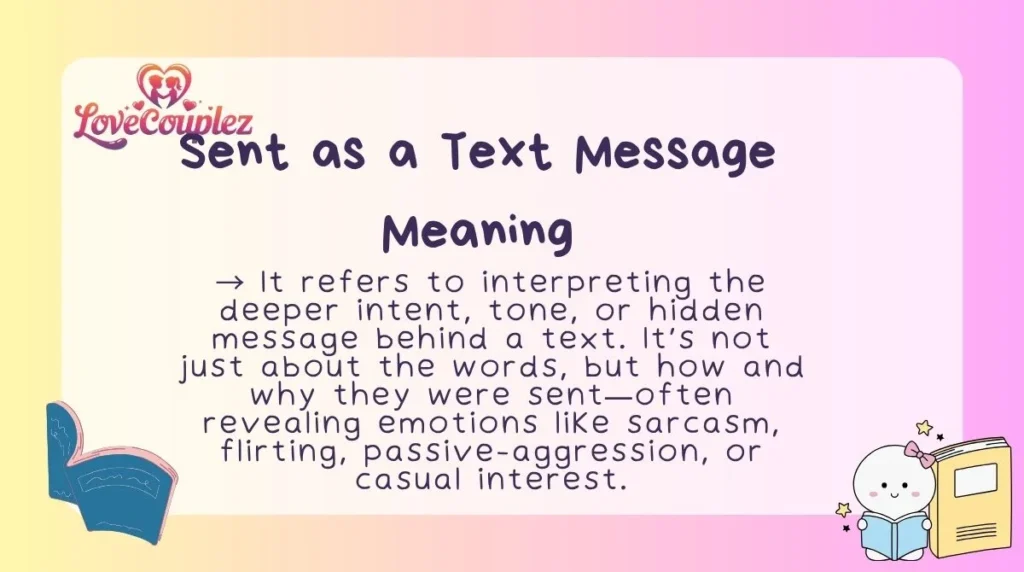
→ It refers to interpreting the deeper intent, tone, or hidden message behind a text. It’s not just about the words, but how and why they were sent—often revealing emotions like sarcasm, flirting, passive-aggression, or casual interest.
Quick Meaning Points:
• Tone: Neutral (depends on context)
• Who uses it most: Gen Z, online users
• Where used most: TikTok, texting, Instagram, Snapchat
• Example sentence: “He just said ‘ok’… what’s that sent as a text message meaning though?”
Core Meaning Explained
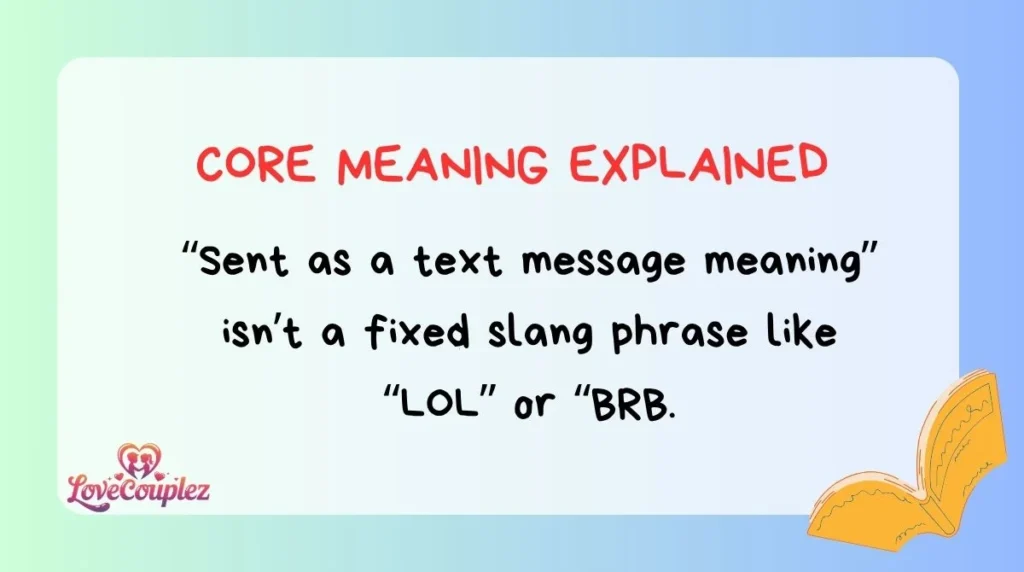
“Sent as a text message meaning” isn’t a fixed slang phrase like “LOL” or “BRB.” Instead, it’s a way people analyze how a message should be understood beyond the literal words.
For example:
- “ok” could mean agreement… or annoyance
- “lol” might mean laughter… or just filler
- “sure” can sound supportive… or passive-aggressive
In modern slang usage, people care less about what is said and more about how it feels when it’s sent.
Texting removes tone of voice, facial expressions, and body language. So people rely on:
- punctuation
- timing
- emojis
- message length
All of these shape the real meaning in text.
Origin + Evolution Timeline
Early Internet Roots
Back in early messaging days (SMS, MSN, Yahoo chat), messages were simple and direct. People didn’t overanalyze tone much.
Meme Spread Phase
With platforms like Twitter and Tumblr, users started joking about how different texts feel. Memes like:
- “K.” vs “Okayyyy”
- “Seen” messages
This is where interpretation culture began.
Mainstream Adoption
As texting became the main form of communication, analyzing messages became normal. TikTok creators started breaking down texts like:
- “What he means when he says…”
- “Texting psychology explained”
2026 Current Usage
Now in 2026, it’s a full culture. People actively question:
- “What did they mean by that?”
- “Why did they type it like that?”
It’s not just communication anymore—it’s decoding.
How Gen Z Uses Sent as a Text Message Meaning Today
TikTok
Short videos explaining:
- “If they text THIS, it means…”
- “Red flags in texting”
Discord
Gaming chats often use short replies. Meaning depends heavily on:
- speed of response
- tone indicators
Gaming Chat
Quick messages like:
- “nice”
- “gg”
Can be genuine or sarcastic depending on context.
Instagram Comments
Replies like:
- “lol ok”
- “interesting…”
Often carry hidden meanings.
Text Messages
The biggest space for this slang concept. Every word, emoji, and delay matters.
Real Chat Style Examples
Friend 1:
“He just replied ‘k’…”
Friend 2:
“Yeah that’s not good 💀”
Friend 1:
“She said ‘I guess’…”
Friend 2:
“Bro that’s a soft no”
Friend 1:
“He typed ‘sure 🙂’”
Friend 2:
“That smile is NOT friendly 😭”
Friend 1:
“No emoji, just ‘ok’…”
Friend 2:
“Yeah something’s off”
Similar Slang Comparison Section
Dry texting
Short, emotionless replies. Often signals disinterest.
Left on seen
Message read but ignored. Strong social signal.
Passive-aggressive texting
Polite words with hidden negative tone.
Soft launching (in texts)
Hinting at something without saying directly.
Vibe check
Testing the emotional tone of a conversation.
Psychological + Social Meaning
People don’t just send texts—they manage impressions.
Why People Use This Style
- Avoid confrontation
- Stay emotionally safe
- Keep things casual
- Control how they are perceived
Social Validation Behavior
People often screenshot chats and ask friends:
- “What does this mean?”
- “Am I overthinking?”
This creates a shared interpretation culture.
Online Identity Signaling
How you text says a lot about you:
- Fast replies = interest
- Long messages = effort
- Short replies = distance
Your texting style becomes part of your identity.
When NOT To Use This Slang
Professional Situations
Don’t overanalyze emails or work messages like this. Keep it direct.
Older Audience
Not everyone reads between the lines. Misunderstandings happen.
Formal Writing
Academic or official communication should stay clear and literal.
Is This Slang Still Trending in 2026?
Yes—and it’s growing.
In fact, it’s not just slang anymore. It’s part of digital communication culture.
Trend Insight
- People are more emotionally aware online
- Texting is the main communication method
- Interpretation skills are becoming essential
Future Prediction
This will evolve into:
- AI-based tone detection
- Messaging apps showing “tone hints”
- Even deeper analysis of communication patterns
Pro Tips to Use Naturally
• Pay attention to message length
• Notice emoji usage
• Look at reply timing
• Compare with their usual texting style
• Don’t overthink every message
• Context always matters
Common Mistakes Section
• Overanalyzing simple messages
• Ignoring context of conversation
• Assuming tone without proof
• Comparing different people’s texting styles
• Taking memes too seriously in real life
Related Slang Words (Mini Glossary)
Dry texter – Someone who replies with little effort
Ghosting – Suddenly stopping replies
Breadcrumbing – Giving small attention without commitment
Soft ghosting – Slowly fading replies
Double texting – Sending another message without reply
Delulu – Being overly hopeful or unrealistic
Main character energy – Acting like the center of attention
Situationship – Undefined relationship
Low effort – Minimal emotional investment
FAQ
What is the meaning in text when someone replies “ok”?
It depends on tone. It can mean agreement, annoyance, or disinterest based on context.
Why do people analyze text messages so much?
Because texting lacks tone, people try to fill in emotional meaning themselves.
Is texting tone really important?
Yes. Small differences in wording can completely change interpretation.
How do I know if I’m overthinking a message?
If you’re creating multiple meanings without clear evidence, you probably are.
Do emojis always show real emotion?
Not always. Some people use them habitually, others use them strategically.
Conclusion
Understanding what something means when it’s sent as a text message is basically a modern survival skill. In 2026, communication isn’t just about words—it’s about timing, tone, and subtle signals.
The more you understand these patterns, the better you read people, avoid confusion, and communicate smarter.