Slang evolves faster than any dictionary can keep up. In 2026 digital culture, decoding meaning in text isn’t just about definitions—it’s about vibes, community codes, and social signals.
Everywhere you scroll on TikTok, Discord, gaming chats, or IG comments, people drop new phrases and expect others to just get it.
When you see something that doesn’t make sense at first glance, chances are it’s rooted in modern slang usage. Understanding slang meaning today is like reading between the lines of online expression—because what’s unsaid is often louder than what’s said.
What does decoding meaning in text mean in slang?
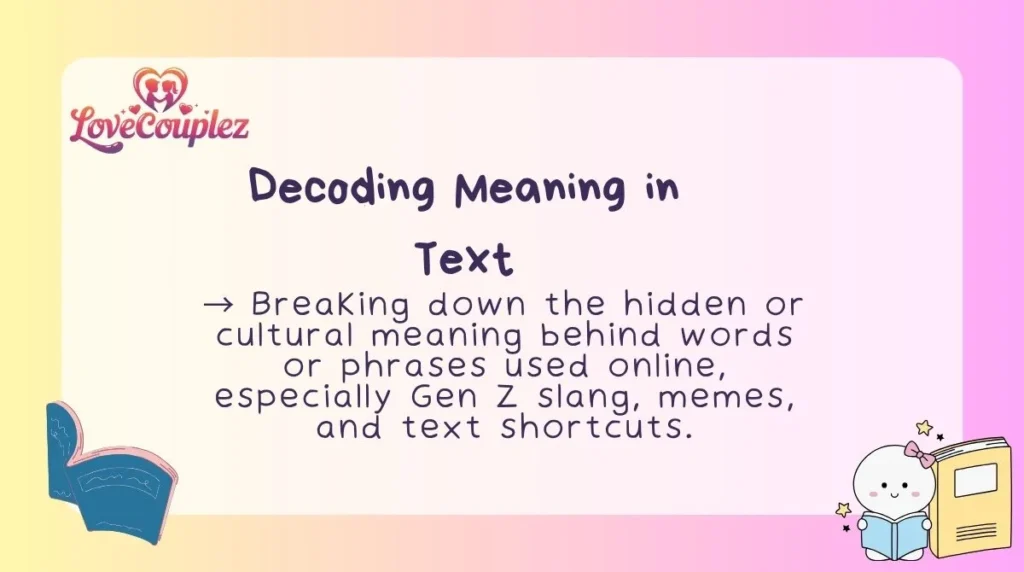
→ Breaking down the hidden or cultural meaning behind words or phrases used online, especially Gen Z slang, memes, and text shortcuts.
Quick Meaning Points:
• Tone: Neutral to Insightful
• Who uses it most: Gen Z + Digital Natives
• Where used most: TikTok, Discord chats, gaming lobbies
• Example sentence: “Can you help with decoding meaning in text from this TikTok line?”
Core Meaning Explained
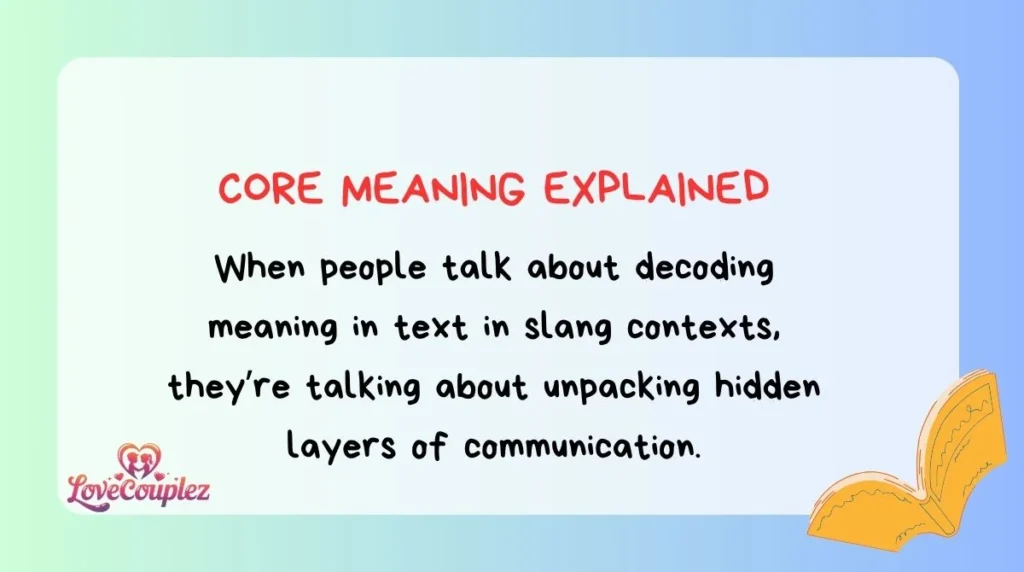
When people talk about decoding meaning in text in slang contexts, they’re talking about unpacking hidden layers of communication. Modern slang is rarely just literal. Instead of straightforward text meaning, slang carries emotion, cultural reference, inside jokes, or social cues that only certain groups instinctively understand. Gen Z doesn’t just use words—they encode attitude, identity, humor, and belonging into them.
For example, a message like “That fit is bussin’” doesn’t literally talk about food—it signals strong approval of someone’s outfit. Decoding meaning in text is the mental skill we use to interpret these signals. It’s like turning raw text into social meaning.
This decoding process has become a digital literacy skill. Most people learned it through exposure while scrolling social feeds, seeing memes, or chatting with friends. It’s part translation, part cultural IQ.
Origin + Evolution Timeline
Early Internet Roots
Back in the early 2000s, slang was simple: abbreviations like “LOL” or “BRB.” Messages were short, text-heavy, and mostly neutral. People learned meaning in text from chatrooms and SMS.
Meme Spread Phase
By the 2010s, memes exploded. With memes came layered meaning—cultural references, irony, wordplay. Reddit, Tumblr, and early Twitter were incubators of slang where decoding meaning in text became necessary to get the joke.
Mainstream Adoption
On platforms like Vine and early Instagram, slang jumped from niche to mainstream. Phrases like “on fleek” or “yeet” spread rapidly because visuals + sound made meaning stick faster. People started caring not just about what words meant, but how they felt.
2026 Current Usage
Now in 2026, decoding meaning in text is about understanding context, tone, trend cycles, and platform-specific usage. TikTok sounds, Discord emotes, IG reels, and gaming shorthand all carry unique meaning layers. You must decode meaning in text to navigate digital conversation fluently.
How Gen Z Uses Decoding Meaning in Text Today (2026 Focus)
TikTok
TikTok pushes rapid trend cycles. A word can shift meaning within weeks. Gen Z uses dances, sounds, and subtitles where literal text meaning fades and decoding becomes essential. Users read between the lines of audio cues and visual edits to figure out meaning.
Discord
On Discord, slang meaning is compressed into symbols, emotes, and shared in-group lore. Decoding meaning in text here often relies on knowledge of community-specific slang like server jokes or role-based references.
Gaming Chat
Fast-paced chat during games like Valorant or Fortnite means meaning has to be decoded instantly. Text like “rush B, it’s a vibe” isn’t just a command—it’s a cultural cue about playstyle and group identity.
Instagram Comments
IG comments often use slang layered with sarcasm or positivity. To decode meaning here, people look at emojis, reply chains, hashtags, and inside jokes embedded within comments.
Text Messages
In private messages, Gen Z mixes slang with shorthand, inside jokes, and emotional cues. You decode meaning in text based on prior context, tone markers (like ellipses or caps), and known personality of the sender.
Real Chat Style Examples
Friend 1: “I can’t tell if this caption is serious or ironic 🤨”
Friend 2: “Big time decoding meaning in text moment lol.”
Friend 1: “She said ‘it slaps’ about that song.”
Friend 2: “Yeah it bops. No decoding needed.”
Friend 1: “Why would he post that meme unironically?”
Friend 2: “Beats me. Just vibes, but makes decoding meaning in text a headache.”
Friend 1: “Saw someone say ‘this fit is whole culture’.”
Friend 2: “Nah it’s just flexing. Meaning in text is obvious.”
Friend 1: “They said ‘we stan responsibly’ in caption.”
Friend 2: “That’s Gen Z cringe but OK 😂”
Similar Slang Comparison Section (SEO GOLD)
Decode vs Decode Meaning in Text
“Decode” is used broadly to mean interpret or understand something hidden. “Decoding meaning in text” specifically targets how slang, memes, and digital cues hide meaning.
Vibe Check vs Decode Meaning in Text
A vibe check is evaluating mood or attitude. Decoding meaning in text requires analysis beyond mood—factoring in context, trend knowledge, and cultural signals.
Slang Definition vs Modern Slang Usage
A slang definition is a stable meaning. Modern slang usage constantly shifts meaning—so decoding becomes more active than static definition.
Context Clues vs Decoding Slang
Context clues help in reading comprehension. Decoding slang meaning in text adds social and cultural context, not just grammar.
Inside Joke vs Slang Interpretation
Inside jokes require shared experience. Slang interpretation requires cultural familiarity. Both need social knowledge, but slang often spreads beyond original circles.
Psychological + Social Meaning
Why do people use slang that needs decoding? It’s not just about being trendy. Language functions as a social signal.
Social Identity
Slang creates a sense of belonging. When someone understands a phrase without explanation, they feel “in the know.” Decoding meaning in text becomes a rite of passage within digital communities.
Social Validation Behavior
Using slang correctly gets likes, replies, and social approval. Misusing it can lead to awkwardness or exclusion. So people pay attention to not just text meaning but how it functions socially.
Cognitive Play
Humans enjoy pattern recognition and wordplay. Slang meaning thrives because it bends language rules and invites interpretation. Decoding meaning in text is a mental game that keeps digital culture engaging.
When NOT To Use This Slang
Using decoding meaning in text slang doesn’t fit everywhere.
- Professional situations: LinkedIn posts, resumes, business emails—formal context kills slang meaning and can seem unprofessional.
- Older audiences: People unfamiliar with digital slang may misunderstand or misinterpret meanings.
- Formal writing: Essays, reports, academic work need clear language, not coded meaning.
- Cross-cultural conversation: Slang may not translate across cultures and could confuse meaning.
Is This Slang Still Trending in 2026?
Yes. Decoding meaning in text is less a specific slang word and more a digital literacy skill that continues to grow. Because language online shifts constantly, the practice of interpreting meaning will stay relevant. Future trends may include AI-assisted interpretation, but the human instinct to decode social signals will remain central to social media participation.
Pro Tips to Use Naturally
• Watch how native users apply slang on TikTok before using it
• Pay attention to emojis—they often change meaning
• Consider audience—don’t force slang in formal texts
• Pair slang with context clues so readers can follow
• Stay updated with trend cycles for fresh usage
Common Mistakes Section
- Assuming slang meaning is literal
- Using slang outside its context
- Relying only on definitions without cultural cues
- Overusing slang, making text confusing
- Mixing outdated slang with current trends
Related Slang Words (Mini Glossary)
• Bet – Agreement or affirmation
• Cap / No cap – Lie / Truth
• Slaps – Very good (usually about music)
• Bussin’ – Really excellent
• Vibe – Mood or atmosphere
• Stan – To strongly support
• Sus – Suspicious
• Flex – Show off
• Ghosting – Suddenly ignoring someone
• TFW – That feeling when (contextual emotion)
FAQ
What is decoding meaning in text slang?
It’s the process of interpreting hidden or cultural meanings in online language, especially slang that isn’t literal.
How do you decode slang on TikTok?
Look at trends, audio context, captions, and how creators react in comments for cues.
Why is decoding slang important?
It helps you understand social cues, humor, and cultural references that plain definitions don’t capture.
Is decoding slang meaning the same as translating?
Not exactly—decoding includes social and emotional context, not just word-for-word meaning.
Can decoding meaning in text help communication?
Yes, it improves digital literacy and helps avoid misunderstanding in social conversations.
Conclusion
Understanding how to decode meaning in text is essential for navigating 2026 digital culture with confidence and connection.
Whether you’re texting friends or scrolling TikTok, being fluent in modern slang usage enriches conversation and strengthens community bonds.