Slang evolves faster than your favorite TikTok trend, and staying on top means decoding words before everyone else. “FWB” is one of those little acronyms you’ve seen in texts, DMs, or gaming chats, and it’s not just shorthand—it’s a social signal. From memes to Discord servers, this term has traveled far.
By understanding it, you’ll not only read the room online but communicate in a way that feels native to Gen Z in 2026.
What does fwb meaning in text mean in slang?
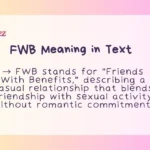
→ FWB stands for “Friends With Benefits,” describing a casual relationship that blends friendship with sexual activity without romantic commitment.
Quick Meaning Points: • Tone: Neutral/Playful • Who uses it most: Gen Z and Millennials • Where used most: TikTok, Discord, Instagram, texting • Example sentence: “We’ve been FWB for months, no strings attached.”
Core Meaning Explained
FWB, or Friends With Benefits, is a term that balances friendship and physical intimacy. Unlike a romantic relationship, it avoids emotional commitment but maintains a connection that allows for casual fun. Its meaning in text is context-dependent—sometimes flirty, sometimes humorous, and often signaling understanding between peers about boundaries and expectations.
This slang is a shortcut to communicate relationship dynamics quickly. In 2026 digital culture, it also functions as a meme-able, shareable concept that pops up in TikTok skits, meme captions, and viral Twitter threads.
Origin + Evolution Timeline
Early Internet Roots: FWB started as a written shorthand in chat rooms and early dating forums in the 2000s, allowing people to describe casual arrangements succinctly.
Meme Spread Phase: Around the 2010s, memes and Vine clips popularized the term beyond dating apps, showing awkward FWB situations humorously.
Mainstream Adoption: By 2020, it became common in social media bios, texting, and casual conversation, signaling relationship style.
2026 Current Usage: Today, FWB is used not only in dating context but also jokingly in gaming, streaming, and meme content, often to exaggerate commitment-free partnerships between friends.
How Gen Z Uses FWB Today
TikTok: Short comedic skits, dance videos with captions joking about FWB dynamics.
Discord: Casual gaming groups use FWB jokingly for in-group memes or to describe game partnerships.
Gaming Chat: Players describe teammates or co-op partners with playful shorthand like FWB when joking about loyalty and collaboration.
Instagram Comments: Memes, relatable post captions, and storytelling posts often use FWB to comment on modern dating humor.
Text Messages: Peer-to-peer messaging keeps the original meaning, often with emojis or casual tone to reduce awkwardness.
Real Chat Style Examples
Friend 1: “So… are we still just FWB or is this getting weird?” Friend 2: “Still FWB 😎, no drama lol”
Friend 1: “He slid into my DMs… thinking we’re dating” Friend 2: “Bruh, remind him it’s FWB, not GF vibes 😂”
Friend 1: “Should I tell her I like her?” Friend 2: “Nah, just keep it FWB. No strings attached 🤷”
Similar Slang Comparison
FWB vs. Situationship: Situationship leans more on emotional ambiguity than FWB’s casual sexual focus.
FWB vs. Casual Hookup: Casual hookup is usually one-time; FWB implies ongoing arrangement.
FWB vs. Booty Call: Booty call is often impromptu and less relational; FWB maintains a friendship base.
FWB vs. Ghosting: Ghosting is disappearing, FWB is about maintaining friendly contact without romance.
FWB vs. Polyamorous Relationship: Polyamory is ethical non-monogamy with multiple partners, more structured; FWB is simple and casual.
Psychological + Social Meaning
People use FWB slang to navigate intimacy without emotional vulnerability. It signals awareness of boundaries, modern dating literacy, and social savvy. Using FWB in texts or memes signals peer conformity and online identity—showing you understand contemporary dating culture. For Gen Z, it’s also about humor, relatability, and maintaining social validation while avoiding commitment.
When NOT To Use This Slang
- Professional emails or workplace chats
- Messaging older generations unfamiliar with modern abbreviations
- Formal writing or academic contexts
- Public posts where relationship details could misfire
- Sensitive conversations about consent or commitment
Is This Slang Still Trending in 2026?
FWB remains widely recognized in 2026. While core meaning hasn’t changed, it’s evolved into meme culture, gaming in-jokes, and social commentary. Its future shows continued casual use, but likely more humorous, meme-driven forms rather than serious dating declarations.
Pro Tips to Use Naturally
- Pair with emojis for tone clarity
- Only use with peers who understand digital culture
- Keep context casual to avoid miscommunication
- Mix in humor to reflect meme-savvy Gen Z style
- Use in memes, text jokes, or informal DMs—not professional posts
Common Mistakes
- Using FWB in professional or formal messages
- Confusing FWB with a romantic relationship
- Overexplaining FWB in text
- Using it with people unfamiliar with internet slang
- Mixing it with contradictory terms (like calling someone FWB and dating them simultaneously)
Related Slang Words
Situationship: Emotionally undefined relationship Hookup: Casual sexual encounter Booty Call: Late-night sexual request Ghosting: Disappearing without explanation FWIW: For what it’s worth Ship: Wanting people to date Swipe Right: Dating app approval Cuffing Season: Temporary romantic period Thirst Trap: Provocative social post Flex: Showing off achievements or possessions
FAQ
What does FWB mean in text 2026?
Friends With Benefits—a casual friendship with sexual activity but no romantic commitment.
Is FWB slang positive or negative?
Neutral to playful depending on context.
Where is FWB mostly used?
TikTok, Discord, Instagram, gaming chat, and text messages.
How to tell if someone wants FWB?
They’ll often communicate casually, avoid romantic talk, and joke about boundaries.
Is FWB still common in 2026?
Yes, widely recognized, mostly humorous or meme-driven in social media culture.
Conclusion
FWB meaning in text is more than just an acronym—it’s a social shortcut, a meme-ready concept, and a marker of Gen Z communication style.
Understanding it keeps you digitally fluent, socially aware, and ready to read the online room like a pro.