Slang evolves faster than ever in 2026, driven by TikTok trends, Discord communities, and meme culture. Words like “hru” are popping up in text messages, gaming chats, and Instagram comments, leaving some confused.
Understanding “hru” in text isn’t just about decoding letters—it’s about decoding a social vibe, a digital tone, and a quick connection between friends. Let’s explore the meaning in text, why it matters, and how Gen Z is using it today.
What does hru meaning in slang?
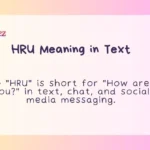
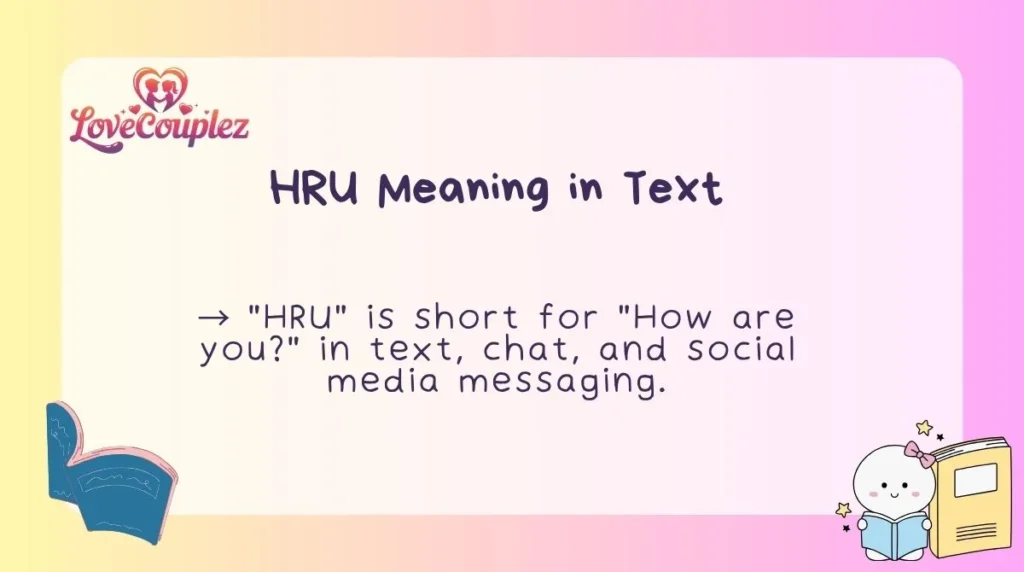
→ “HRU” is short for “How are you?” in text, chat, and social media messaging. It’s a casual, friendly way to check in without formal phrasing, often signaling openness to conversation.
Quick Meaning Points: • Tone: Neutral to positive • Who uses it most: Gen Z, young millennials • Where used most: TikTok, Discord, gaming chats, Instagram DMs • Example sentence: “Hey, hru? Haven’t seen you in a while!”
Core Meaning Explained
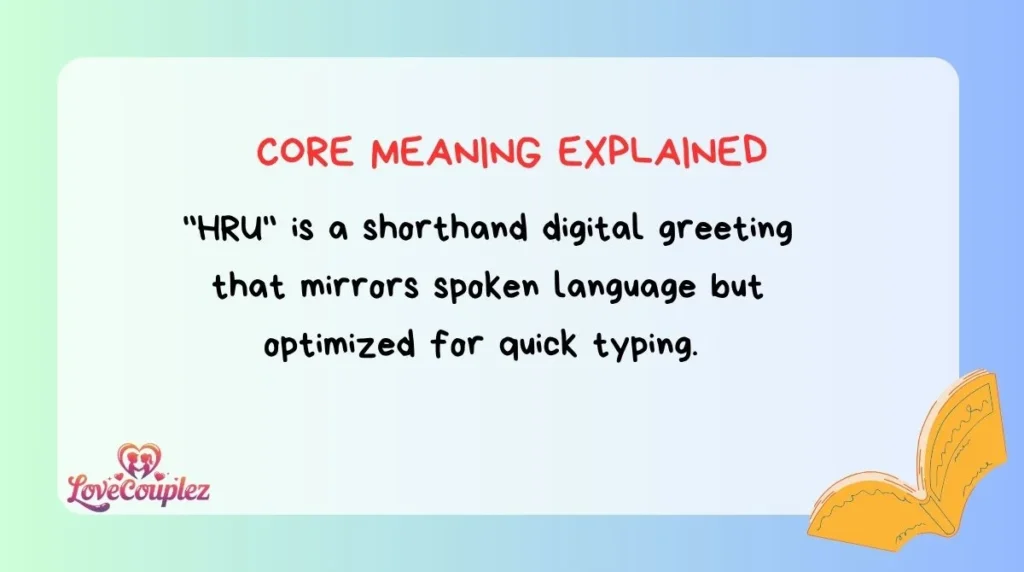
“HRU” is a shorthand digital greeting that mirrors spoken language but optimized for quick typing. Unlike formal greetings, it is flexible, often paired with emojis or casual punctuation. The meaning is simple—you’re asking about someone’s current mood or state—but its usage is loaded with context: closeness, informality, and online friendliness. It’s essentially a social check-in that fits into rapid, meme-driven communication.
Origin + Evolution Timeline
Early internet roots: Abbreviations like “hru” appeared on early instant messaging platforms (AIM, MSN Messenger) to save typing time.
Meme spread phase: Between 2010–2020, “hru” was incorporated into memes, Twitch chats, and Tumblr posts. Humorous or ironic uses turned it into a cultural in-joke.
Mainstream adoption: Around 2022–2024, “hru” became common in TikTok captions, Instagram stories, and Discord servers, blending convenience with social signaling.
2026 current usage: “HRU” is now ubiquitous among Gen Z in quick texts, DMs, and gaming communities. It’s recognized across social media, often with emojis or GIFs to convey tone.
How Gen Z Uses HRU Today
TikTok: Used in captions or duet comments as a friendly opener.
Discord: Common in server chat rooms, especially for casual check-ins during gaming sessions.
Gaming chat: Quick ping to teammates or friends without breaking the flow of gameplay.
Instagram comments: Used under posts as a lightweight engagement or conversation starter.
Text messages: Often paired with emojis (😊, 👋) for a more personal touch.
Real Chat Style Examples
Friend 1: hru?
Friend 2: good, u?
Friend 1: chillin, wanna play Valorant later?
Friend 1: hru feeling today?
Friend 2: pretty meh, had a long day 🙁
Friend 1: aww, hope it gets better ❤️
Similar Slang Comparison Section
HRU vs. HBY – “HBY” stands for “How about you?” and is often a follow-up rather than the initial greeting.
HRU vs. WYA – “WYA” means “Where you at?” more location-specific than mood-focused.
HRU vs. SUP – “Sup” is casual like “HRU” but more of a general opening, not directly asking about feelings.
HRU vs. YO – “Yo” is attention-grabbing rather than check-in oriented.
HRU vs. HMU – “HMU” means “Hit me up” and is more action-oriented than conversational.
Psychological + Social Meaning
People use “HRU” to maintain social bonds quickly. It’s a digital expression of empathy and interest without the friction of typing full sentences. The slang also serves as an online identity signal: using short, efficient terms signals familiarity with Gen Z digital culture and shows alignment with peer groups. Social validation comes from responses—acknowledgment reinforces bonds.
When NOT To Use This Slang
Professional situations: Avoid in emails, reports, or LinkedIn messaging.
Older audience: Some may misinterpret abbreviations as careless or rude.
Formal writing: Academic, legal, or public communication should not include “HRU.”
Is This Slang Still Trending in 2026?
Yes. “HRU” remains relevant, especially on platforms where rapid communication and meme-driven context dominate. While some new abbreviations may emerge, “HRU” retains its role as a baseline check-in greeting. Prediction: the abbreviation will continue evolving visually with emojis, GIFs, or interactive stickers, but the core meaning will stay intact.
Pro Tips to Use Naturally
- Pair with emojis to convey tone
- Use in casual texts and DMs, not formal writing
- Respond promptly to maintain flow
- Mix with other slang for authenticity
- Adapt to platform norms (Discord vs TikTok captions)
- Keep messages brief to respect digital culture pacing
Common Mistakes Section
- Using in professional emails
- Overloading with too many emojis
- Misinterpreting tone (assume context matters)
- Spamming multiple messages with “HRU?”
- Using with strangers without context
Related Slang Words (Mini Glossary)
- BRB – Be right back
- OMG – Oh my God
- IDK – I don’t know
- TTYL – Talk to you later
- SMH – Shaking my head
- RN – Right now
- FWIW – For what it’s worth
- IMO – In my opinion
- TBH – To be honest
- ICYMI – In case you missed it
FAQ
What does HRU mean in text messages?
It’s short for “How are you?” used for quick check-ins.
Is HRU slang positive or negative?
Generally neutral to positive; it shows interest in the other person.
Where is HRU most commonly used?
TikTok comments, Discord, gaming chats, Instagram DMs, text messages.
Can HRU be used with emojis?
Yes, emojis enhance tone and context.
Is HRU still relevant in 2026?
Yes, it’s widely used among Gen Z for casual online greetings.
Conclusion
“HRU” remains a simple yet powerful way to stay connected in 2026 digital culture. Whether in text, Discord, or TikTok comments, it’s a quick, friendly, and socially savvy way to check in.
Use it thoughtfully, pair with context, and you’ll master one of Gen Z’s most enduring slangs.